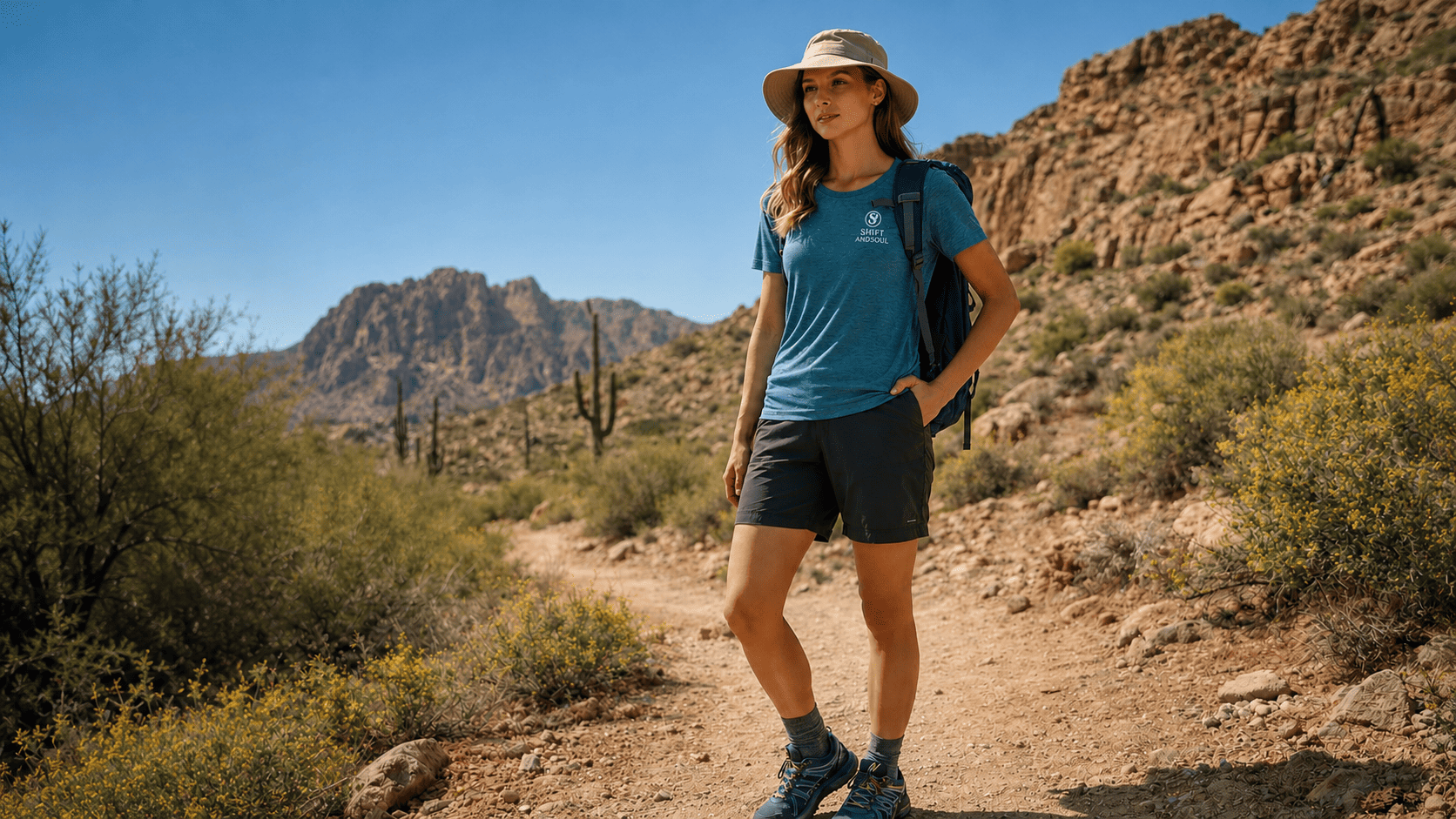
Ask any seasoned hiker what separates a great day on the trail from a miserable one, and most won’t talk about the view. They’ll talk about what they were wearing. The wrong shirt on a warm climb. The wrong pants on a wet descent. The cotton hoodie that took six hours to dry.
What you wear hiking matters — not because the trail cares, but because the wrong gear pulls your attention away from the very thing you came outside for. The goal is to disappear into the experience. The right clothing makes that possible.
Here’s the complete guide.
The One Rule That Matters Most
Before talking about specific pieces, you need to internalize the single most important rule of dressing for the outdoors:
Cotton in cold or wet weather is dangerous. In warm dry weather, it’s wonderful.
Why? Cotton absorbs moisture (sweat or rain) and holds it against your skin. In cold conditions, this pulls heat away from your body fast — hypothermia fast. In warm dry conditions, that same property cools you naturally and feels soft against the skin.
So: cotton is your friend on a sunny summer hike. Cotton is your enemy on a rainy mountain trail. Plan accordingly.
The Layering System
Every outdoor outfit, regardless of season, follows the same three-layer logic. Master this, and you’ll never be miserable on a hike again.
Layer 1: The Base
This is the layer touching your skin. Its job is to move sweat away from your body. In warm weather, this is often the only layer you need.
- Warm weather: A soft cotton-blend graphic tee or tank top. Breathable, light, easy.
- Cool weather: A moisture-wicking synthetic or merino wool long-sleeve.
- Cold weather: A thicker merino wool base layer, top and bottom.
For day hikes in mild weather, a comfortable graphic tee or tank does the job beautifully. Our women’s graphic tees and men’s graphic tees are cut with relaxed silhouettes and breathable cotton blends — ideal for trails that don’t push into alpine conditions.
Layer 2: The Insulation
This is what keeps body heat in when temperatures drop. You don’t always need it, but you should always carry it on hikes longer than two hours, even in summer — mountain weather changes fast.
- A light fleece for cool mornings.
- A puffer jacket (down or synthetic) for cold or windy conditions.
- A wool overshirt for breathable warmth on mild days.
Layer 3: The Shell
This is the layer that protects you from rain, wind, and snow. It doesn’t need to be insulating — it just needs to be windproof and waterproof. Even a cheap rain shell beats nothing. Pack it always.
The Bottoms: Underrated and Easy to Get Wrong
Most hiking advice obsesses over jackets and ignores pants. That’s a mistake. Your legs do most of the work on a hike, and uncomfortable bottoms ruin everything.
- Hot weather: Lightweight hiking shorts, athletic shorts, or stretchy cotton-blend joggers.
- Mild weather: Stretchy hiking pants or joggers with reinforced knees.
- Cold weather: Insulated softshell pants or a base layer under hiking pants.
Avoid jeans at all costs. They restrict movement, hold moisture forever, and chafe.
The Footwear Question
The right shoe depends entirely on the terrain. For most day hikers on most trails, this breaks down simply:
- Smooth, dry, well-maintained trails: Comfortable running shoes or trail runners are perfectly fine. They’re lighter, faster, and dry quicker than boots.
- Rocky, uneven, or muddy trails: Low-cut hiking shoes with grippy soles.
- Long, rugged, or pack-laden hikes: Mid or high-cut hiking boots with ankle support.
Whatever you choose, break them in before a long hike. New boots on a 10-mile trail is a guaranteed way to ruin a day — and possibly your feet.
Accessories That Earn Their Place
Most hiking accessories are unnecessary marketing. A few are genuinely essential.
- A wide-brimmed hat or cap: Sun protection beats sunscreen for face and neck.
- Polarized sunglasses: Reduce eye fatigue dramatically, especially near water or snow.
- Wool socks: Cushioning, blister prevention, temperature regulation. Worth every dollar.
- A buff or bandana: Sweat band, neck warmer, dust mask, headband — the most versatile piece you’ll carry.
- A small daypack: Big enough for water, snacks, your shell layer, and a first aid kit.
Outfit Ideas by Trail Type
The Easy Local Trail (Under 5 Miles, Mild Weather)
A soft graphic tee or tank top, comfortable shorts or joggers, broken-in running shoes, a baseball cap, and a small pack with water and a snack. That’s it. Don’t overthink it.
The Moderate Half-Day Hike (5-10 Miles, Variable Weather)
Base layer tee or tank, light fleece in your pack, stretchy hiking pants or convertible pants, low-cut hiking shoes, hat, sunglasses, daypack with water, snacks, rain shell, and a first aid kit.
The Long Day Hike (10+ Miles or Higher Elevation)
Layered base + fleece + shell, full hiking pants, mid-cut hiking boots, wool socks, brimmed hat, sunglasses, hiking poles if descent is steep, larger daypack with water purification, extra food, headlamp, and emergency layer.
Style Meets Function
For a long time, “hiking clothing” meant ugly. Beige zip-off pants. Brand-logoed performance shirts that screamed at you from a half-mile away. There’s no rule that says outdoor gear has to look like a catalog ad.
The best hiking outfits today blend function and personal style. A vintage mountain-graphic tee. A soft sage tank top. A pair of stretchy joggers that look just as good at the café afterward. Clothing that doesn’t shout. Clothing that lets the trail do the talking.
That’s the entire philosophy behind Shift And Soul — outdoor-grounded pieces that move easily between trail and town, between movement and rest.
One Last Thing
The biggest mistake new hikers make is overbuying gear before they understand what they actually need. Don’t drop $800 on equipment before your first ten hikes. Start with what you have. Borrow what you can. Buy slowly, after you know what works for your body and your terrain.
The mountain doesn’t care what you’re wearing. It just cares that you showed up.
Building a versatile hiking wardrobe? Browse our full collection of nature-inspired men’s tees, women’s tees, and tank tops — designed to move with you from trailhead to summit and back.